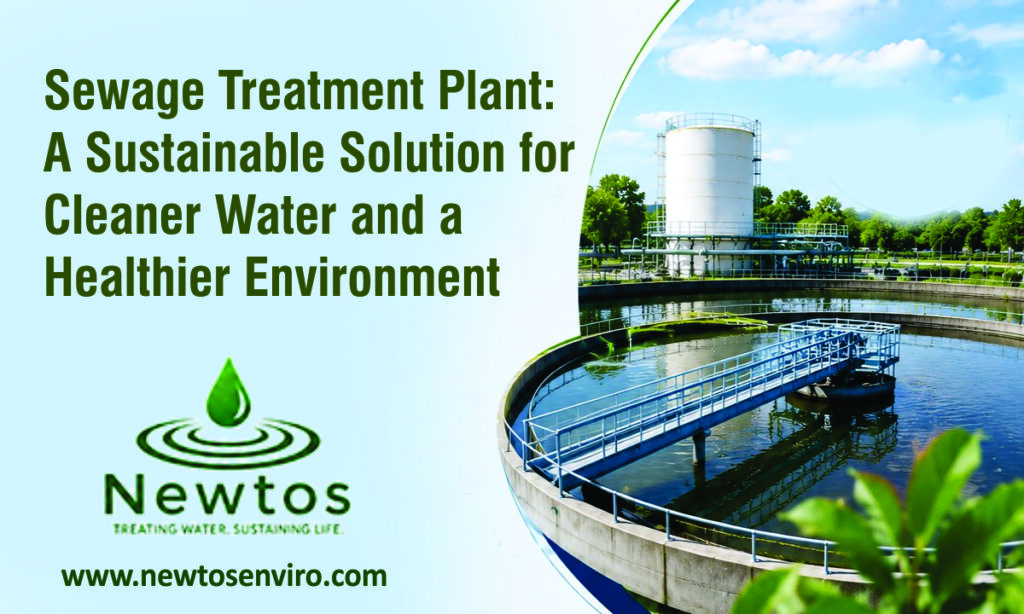
A Sewage Treatment Plant is an integral part of the sewage treatment system for all residential, commercial, and industrial buildings and corporations. Sewage production has increased as urban areas have grown. To protect our natural resources, sewage treatment plants eliminate all pollutants from the raw sewage. Purified water can be safely discharged or used for non-potable purposes. Environmental sustainability is essential, and enterprises need to meet sewage discharge requirements, requiring proper sewage treatment facilities.
Aims of Sewage Treatment Plant
The wastewater treatment plants remove physical, biological, and chemical contaminants from wastewater. Purification of sewage is a multi-stage process of sewage water purification and sludge obtaining. This leads to a considerable reduction of pollutants, suspended impurities, organic compounds, pathogenic microbes, and nutrients that might have negative effects on natural ecosystems.
Purified water can be used for many purposes depending on the type of purification—for example, cooling systems, flushing toilets, watering plants, or irrigation.
Key Steps in the Treatment Process
The efficiency of a Sewage Treatment Plant depends on a regular sequence of treatment.
In most cases, the process starts with a preliminary treatment to remove big debris, plastics, sand and grit that could damage downstream equipment.
The next step is primary treatment, when the suspended materials settle out naturally by gravity. This minimises the solid burden going to biological treatment.
Secondary treatment is the process when microorganisms break down dissolved organic contaminants. Such a method improves the water quality by removing biodegradable contaminants.
The last tertiary treatment applies enhanced filtration and disinfection to ensure the water is sufficiently clean to be discharged or reused in accordance with the appropriate environmental legislation.
Benefits of Establishing a Sewage Treatment Plant
There are many advantages to constructing such a facility, both in its operation and in environmental protection. First of all, it will help prevent pollution of water bodies, maintain their quality, and conserve water more generally through reuse techniques.
Construction of a Sewage Treatment Plant is crucial for properly handling wastewater on business sites, in residential areas, in schools, hospitals, and industrial zones. Proper treatment also helps eliminate unpleasant scents and reduce environmental impact.
The company Newtos Enviro India Pvt. Ltd. helps organisations implement wastewater treatment projects.
Things to Think About Before Selecting a Treatment System
Selecting a suitable Sewage Treatment Plant requires careful consideration of several technical parameters. The parameters influencing the system design are: daily sewage generation, available installation area, future extension, wastewater properties, discharge norms, and ease of maintenance.
It is similarly critical that the plant be designed to operate consistently under varying flow conditions. High-quality equipment, appropriate automation when needed, and proper maintenance planning can improve process efficiency and the lifetime of the entire system.
Conclusion
A Sewage Treatment Plant is an investment in environmental consciousness and in the intelligent use of water. The plant will be able to treat wastewater efficiently, saving natural resources, reducing pollution and meeting environmental criteria. This type of treatment plant is an investment for the long term, as it will ensure efficient wastewater management. Newtos Enviro India Pvt. Ltd. continues to collaborate with companies looking for efficient water treatment systems and technical solutions.